One-Page Cheat Sheets That Actually Work for College Exams: 4-Quadrant Synthesis Masterclass
How to condense a semester's worth of economics or commerce notes onto single-page visual synthesis sheets for rapid exam revision. 4-quadrant layout, formula blocks, and diagram triggers.
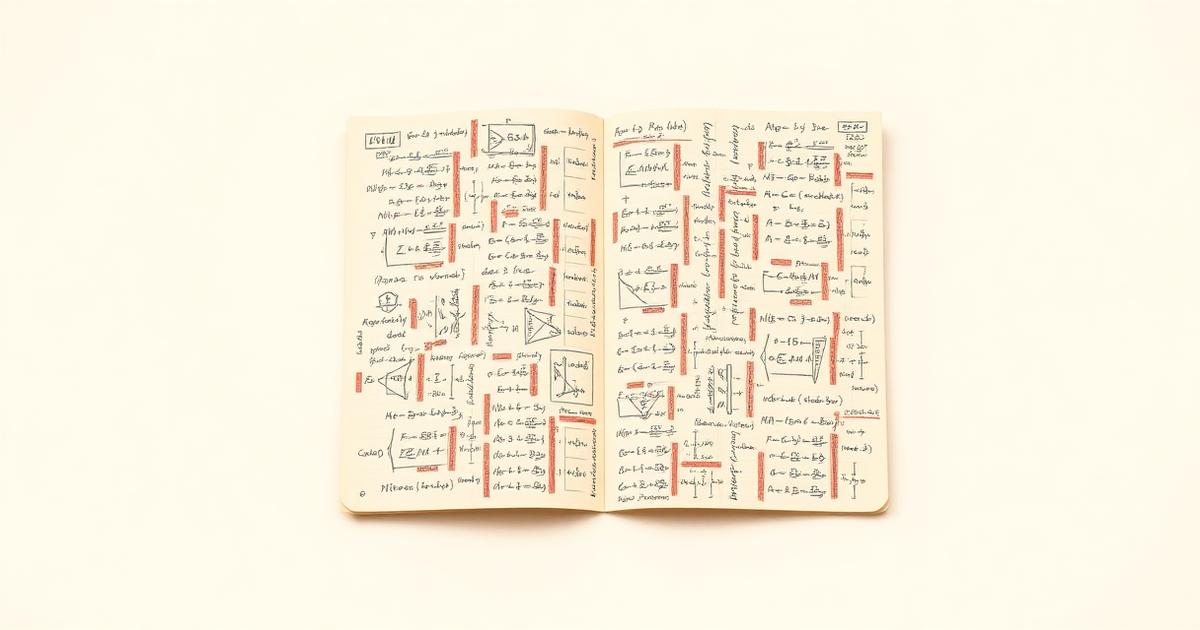
Condensing comprehensive subject modules into single-page synthesis sheets leverages visual chunking and cognitive compression. When preparing for end-semester exams administered by the DU Examination Branch, one-page sheets act as high-speed retrieval triggers during final revision.
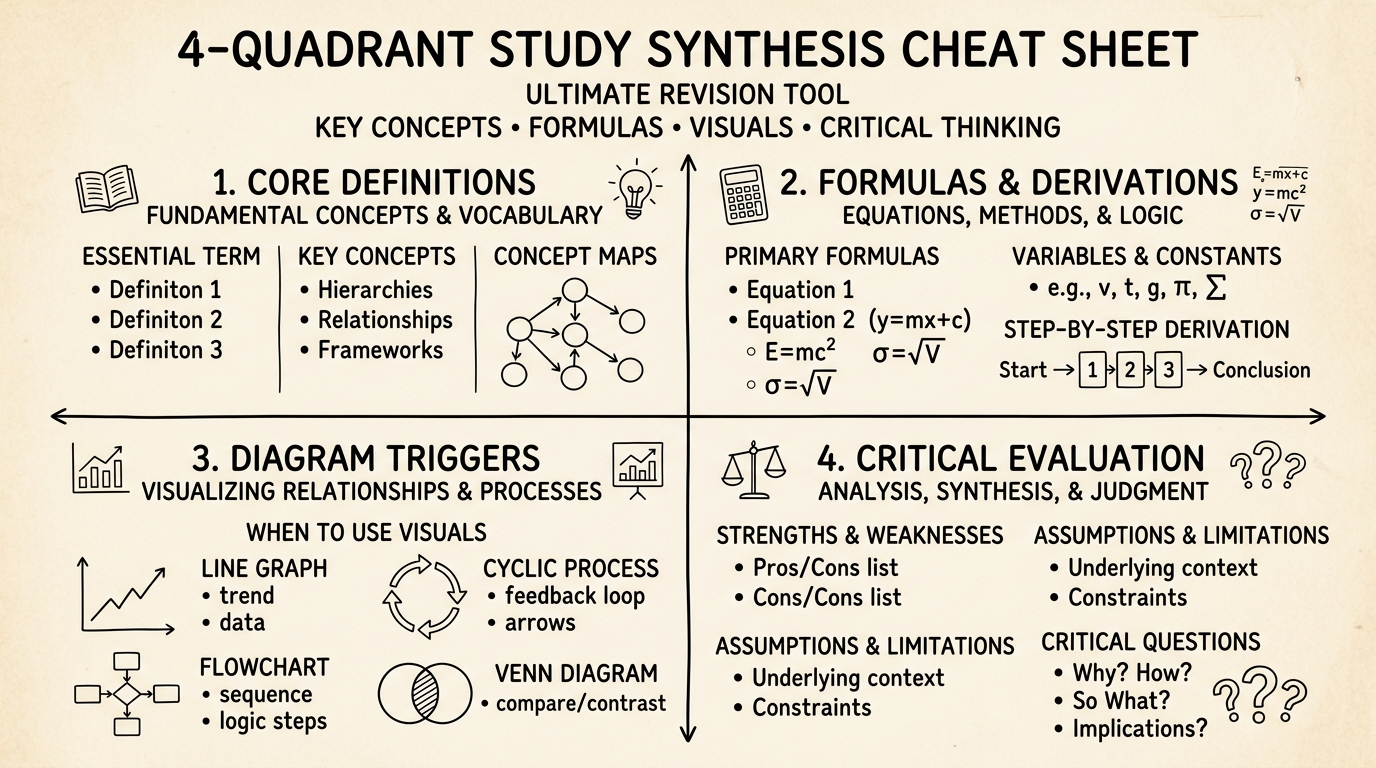
The 4-Quadrant Sheet Architecture
Write 2-line precise definitions and bullet 4 essential model assumptions.
Include FOC, SOC, multipliers, and elasticities in box containers.
Sketches of core diagrams showing axis labels, shift arrows, and equilibrium movements.
Key theoretical critiques, special cases (e.g. liquidity trap), and Indian policy data.
Step-by-Step 3-Pass Creation Protocol
- Pass 1 (Syllabus Filter): Scan syllabus outlines on du.ac.in and extract only high-yield exam topics.
- Pass 2 (Memory Blurting): Close your notebook and fill out as much of the 4 quadrants as possible from memory.
- Pass 3 (Verification & Correction): Open standard textbooks to fill in missed formulas or parameter conditions in red pen.
Related Revision Techniques
Combine one-page sheets with our guides on Active Recall for Theory Subjects and Taking Revision-Ready Semester Notes.
Frequently asked questions
Is a one-page cheat sheet enough for an entire subject?
For theory-heavy papers, yes. For numerical papers like statistics or mathematical methods, use a two-page variant with the second page reserved for worked formulae.
When should I start making the sheet?
Two to three weeks before the exam. It needs at least three passes over that period; a rushed one-night version misses the point of the exercise.
Should I type the sheet or handwrite it?
Handwrite it. The slower pace of copying by hand consolidates the material in a way typing does not.
Can I use a senior's cheat sheet instead of making my own?
Read theirs for the layout idea, then make your own from scratch. The sheet's value is in the act of building it, not in the artefact itself.
Dhairya sat the same DU papers he now writes about. Acadly is his attempt to say the useful things his own first-year self would have wanted to hear.
Keep reading

Active Recall for Theory Subjects: Cognitive Science, Blurting Methods & Spaced Repetition
Exhaustive guide to active recall and retrieval practice for college theory exams. Cognitive psychology foundations, blank-page blurting method, Leitner box flashcards, Anki setups, and 1-3-7-21 spaced repetition schedules.
Building a College Study Timetable You'll Actually Stick To: Energy-Aware Scheduling
Why traditional hour-by-hour timetables fail for college students. How to build energy-aware task blocks that fit around classes, internal assessments, and campus life.

How to Take Notes During the Semester That Are Actually Useful at Revision Time
The Cornell system adapted for DU lectures. Handling fast-talking professors, organizing textbook readings, and structuring notes so you aren't starting from scratch in study leave.