CUET PG Economics 2026 Cutoff Breakdown: DSE (245+), JNU Deprivation Points & Category Ranks
Exhaustive 4,000-word analysis of CUET PG Economics (COQP10) 2026 cutoffs. DSE Delhi raw score thresholds (245+ UR), JNU CESP/CITD deprivation point calculations, complete syllabus breakdown, topic-wise weightage analysis, and 12-week PYQ solving plan.
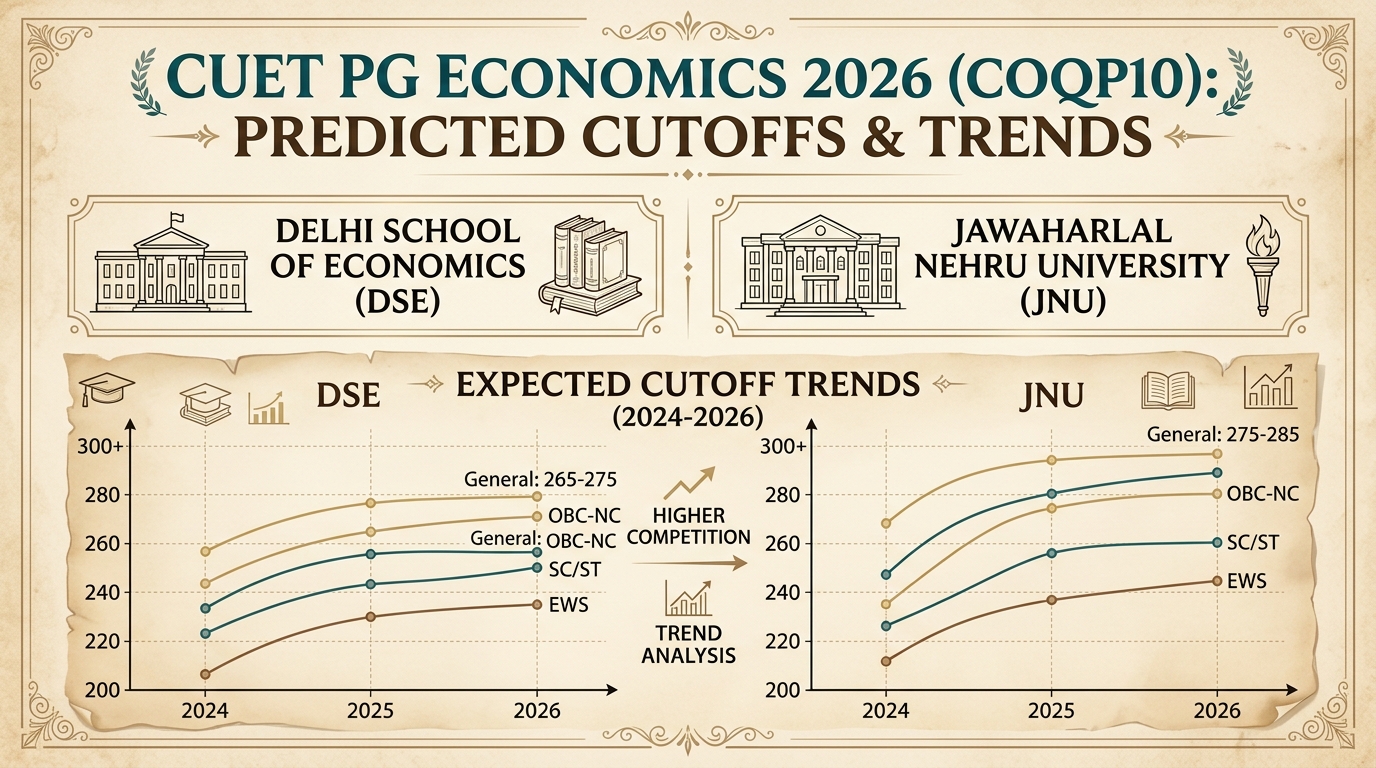
The Central University Entrance Test for Postgraduate Studies (CUET PG 2026) Paper Code COQP10 (Economics / Applied Economics / Econometrics) is the single gateway for admission into India's premier economics departments: the Delhi School of Economics (DSE), Jawaharlal Nehru University (JNU CESP and CITD), University of Hyderabad (HCU), Ambedkar University Delhi (AUD), Central University of Kerala (CUK), and Banaras Hindu University (BHU). This guide provides the most comprehensive public analysis of the 2026 cycle — cutoff benchmarks, syllabus-to-score mapping, and a week-by-week preparation calendar.
1. CUET PG 2026 Exam Structure (COQP10)
| Parameter | Details |
|---|---|
| Paper Code | COQP10 |
| Total Questions | 100 MCQs |
| Maximum Marks | 300 (3 marks per correct answer) |
| Negative Marking | -1 mark for each incorrect answer |
| Duration | 120 minutes (2 hours) |
| Mode | Computer-Based Test (CBT) at NTA designated centres |
| Conducting Body | National Testing Agency (NTA), administered via cuet.nta.nic.in |
2. Complete Syllabus with Topic-Wise Question Weightage
Based on analysis of CUET PG Economics papers from 2022 to 2026, the following topic-wise distribution has been observed:
| Subject Area | Key Topics | Approx. Questions | Marks Weight |
|---|---|---|---|
| Microeconomics | Consumer theory, producer theory, market structures, game theory, welfare economics, general equilibrium | 25-30 | 75-90 marks |
| Macroeconomics | IS-LM, AD-AS, Solow growth, money multiplier, inflation targeting, Mundell-Fleming, Phillips Curve | 25-30 | 75-90 marks |
| Mathematical Economics | Optimization, linear algebra, differential equations, integration, Lagrangian methods | 15-20 | 45-60 marks |
| Statistics & Econometrics | Probability distributions, hypothesis testing, OLS estimation, R-squared, multicollinearity | 10-15 | 30-45 marks |
| Indian Economy | Agriculture, industry, services sector, five-year plans, economic reforms 1991, FDI, current policy | 10-15 | 30-45 marks |
3. 2026 Cutoff Benchmarks Across Top Institutions
| Institution / Department | Unreserved (UR) | OBC-NCL | EWS | SC / ST |
|---|---|---|---|---|
| Delhi School of Economics (DSE) | 245-255 | 225-238 | 230-240 | 185-205 |
| JNU CESP (Centre for Economic Studies) | 235-245 + DP | 215-225 + DP | 220-230 + DP | 175-195 + DP |
| JNU CITD (Int. Trade & Development) | 230-240 + DP | 210-220 + DP | 215-225 + DP | 170-190 + DP |
| University of Hyderabad (HCU) | 210-225 | 195-210 | 200-215 | 165-185 |
| Ambedkar University Delhi (AUD) | 200-215 | 185-200 | 190-205 | 155-175 |
| BHU (Banaras Hindu University) | 195-210 | 175-195 | 185-200 | 150-170 |
DP = JNU Deprivation Points (up to 12 additional points added to CUET PG raw score).
4. JNU Deprivation Points: Complete Calculation System
Unlike all other central universities that rely strictly on CUET PG raw scores, Jawaharlal Nehru University (JNU) uses a unique Composite Score that adds Deprivation Points (DP) to the CUET PG raw score:
JNU Composite Score = CUET PG Raw Score + Deprivation Points (Max 12)
4.1. District-Based Deprivation Points (0 to 5 Points)
JNU classifies all Indian districts into quartiles based on a composite development index. Candidates who completed their Class 10, Class 12, and graduation from districts in Quartile 1 (most backward) receive the maximum points:
- Quartile 1 District (Most Backward): 5 Points
- Quartile 2 District: 3 Points
- Quartile 3 District: 1 Point
- Quartile 4 District (Most Developed): 0 Points
4.2. Gender-Based Deprivation Points (0 to 5 Points)
- Female Candidates: 5 Points
- Transgender Candidates: 5 Points
- Male Candidates: 0 Points
4.3. Additional Deprivation (0 to 2 Points)
- From Backward Area within a District: Up to 2 additional points based on specific sub-district classification.
Example: A female candidate from a Quartile 1 district with CUET PG raw score 220 would receive: 220 + 5 (district) + 5 (gender) = 230 Composite Score, potentially clearing the JNU CESP UR cutoff even with a raw score that would not clear DSE.
5. DSE-Specific Admission Details
The Delhi School of Economics admits students to its MA Economics programme purely based on CUET PG COQP10 scores, with separate merit lists for DU-internal and external candidates:
- DU Internal Quota: Approximately 50% of seats are reserved for candidates who completed their UG degree from a Delhi University college. This quota typically has a 5-10 mark lower cutoff than the external quota.
- External Quota: The remaining 50% is open to all CUET PG candidates from any recognized Indian university.
- Eligibility: Minimum 50% marks in the qualifying UG degree (45% for SC/ST/PwBD). Compulsory Mathematics at Class 12 level was required in previous years — check the current DSE admission brochure at econdse.org for 2026-27 rules.
6. The 12-Week CUET PG Economics Preparation Plan
| Weeks | Focus Area | Core Textbook | Daily Target |
|---|---|---|---|
| 1-3 | Microeconomics (Consumer + Producer Theory) | Varian, Intermediate Microeconomics (Ch. 1-24) | 2 chapters + 20 MCQs |
| 4-6 | Macroeconomics (IS-LM, Growth, Inflation) | Blanchard, Macroeconomics (Ch. 1-20) + Dornbusch | 2 chapters + 20 MCQs |
| 7-8 | Mathematical Economics | Sydsaeter & Hammond, Essential Mathematics | 1 topic + 15 problems |
| 9-10 | Statistics, Econometrics & Indian Economy | Gujarati (Basic Econometrics) + Economic Survey | Mixed revision + 25 MCQs |
| 11-12 | Full-Length Mock Tests & PYQ Papers | CUET PG PYQ papers 2022-2025 + simulated mocks | 1 full mock daily + error analysis |
7. Recommended Book List (Priority Order)
- Microeconomics: Hal Varian, Intermediate Microeconomics (9th Edition) — covers 90% of micro questions.
- Macroeconomics: Olivier Blanchard, Macroeconomics (8th Edition) — clean IS-LM and AD-AS treatment.
- Macroeconomics (Supplement): Dornbusch, Fischer & Startz — for Mundell-Fleming and open-economy depth.
- Mathematical Economics: Sydsaeter & Hammond, Essential Mathematics for Economic Analysis.
- Econometrics: Damodar Gujarati, Basic Econometrics (5th Edition) — Chapters 1-10 are sufficient.
- Indian Economy: India Economic Survey 2025-26 (latest edition) + Ramesh Singh, Indian Economy.
- PYQ Practice: CUET PG Economics solved papers 2022, 2023, 2024, 2025 (available on NTA portal archives).
8. Related Postgraduate & Career Guides
Frequently asked questions
What is a safe score for DSE MA Economics in CUET PG 2026?
A score of 245+ for UR candidates and 225+ for OBC-NCL candidates provides a strong safe margin.
Dhairya sat the same DU papers he now writes about. Acadly is his attempt to say the useful things his own first-year self would have wanted to hear.
Keep reading

DU Foreign Language Courses 2026: Certificate & Diploma Admissions, Fees & Scope
Exhaustive 4,000-word guide on Delhi University foreign language courses in 2026. Covers Certificate, Diploma, and Advanced Diploma admissions at St. Stephen's, Hansraj, and GRS department, fees, and career scope.
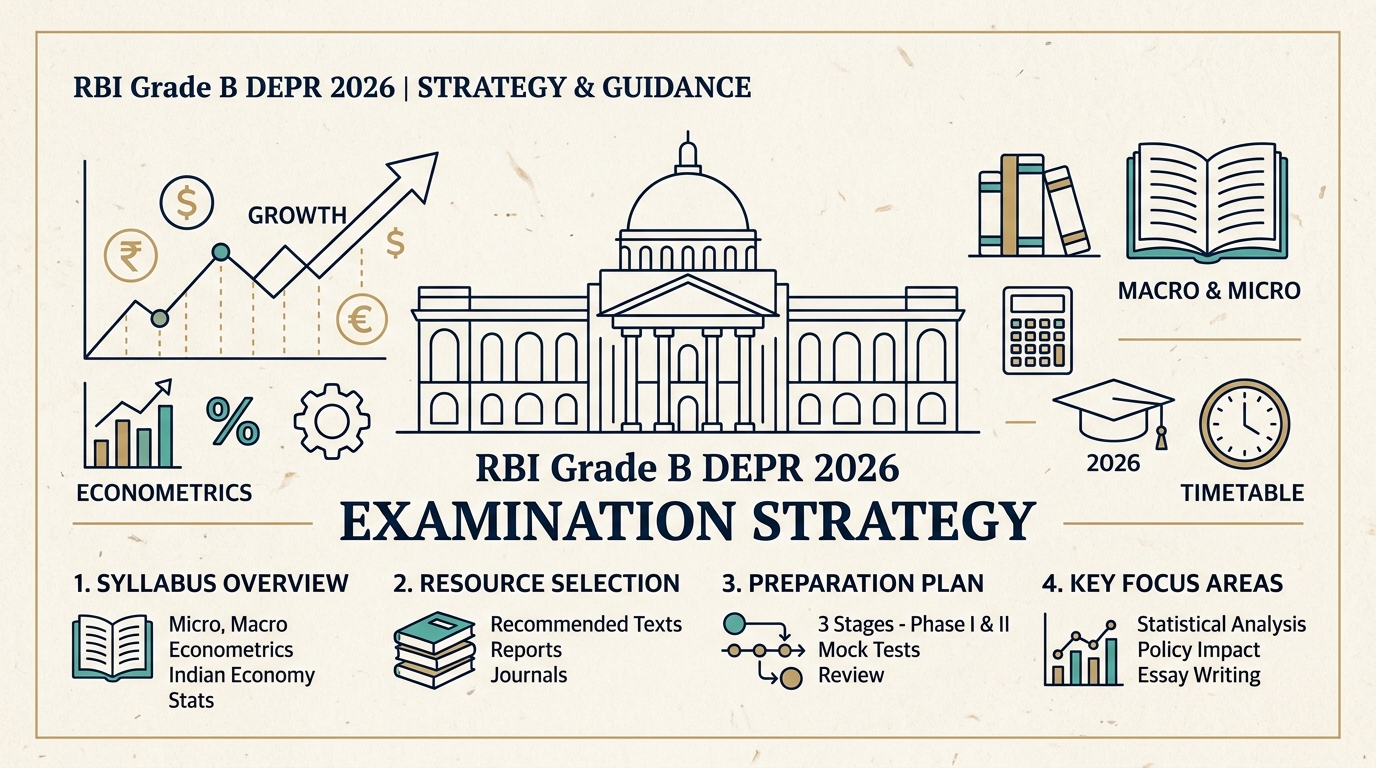
RBI Grade B DEPR 2026 Preparation: Phase 1 & 2 Syllabus, DSE Course Mapping & Books
Exhaustive 4,000-word preparation guide for RBI Grade B DEPR (Department of Economic and Policy Research) 2026. Phase 1 Objective & Phase 2 Descriptive exam papers, complete syllabus, DSE/DU course mapping, PYQ analysis, book recommendations, and 6-month preparation timeline.
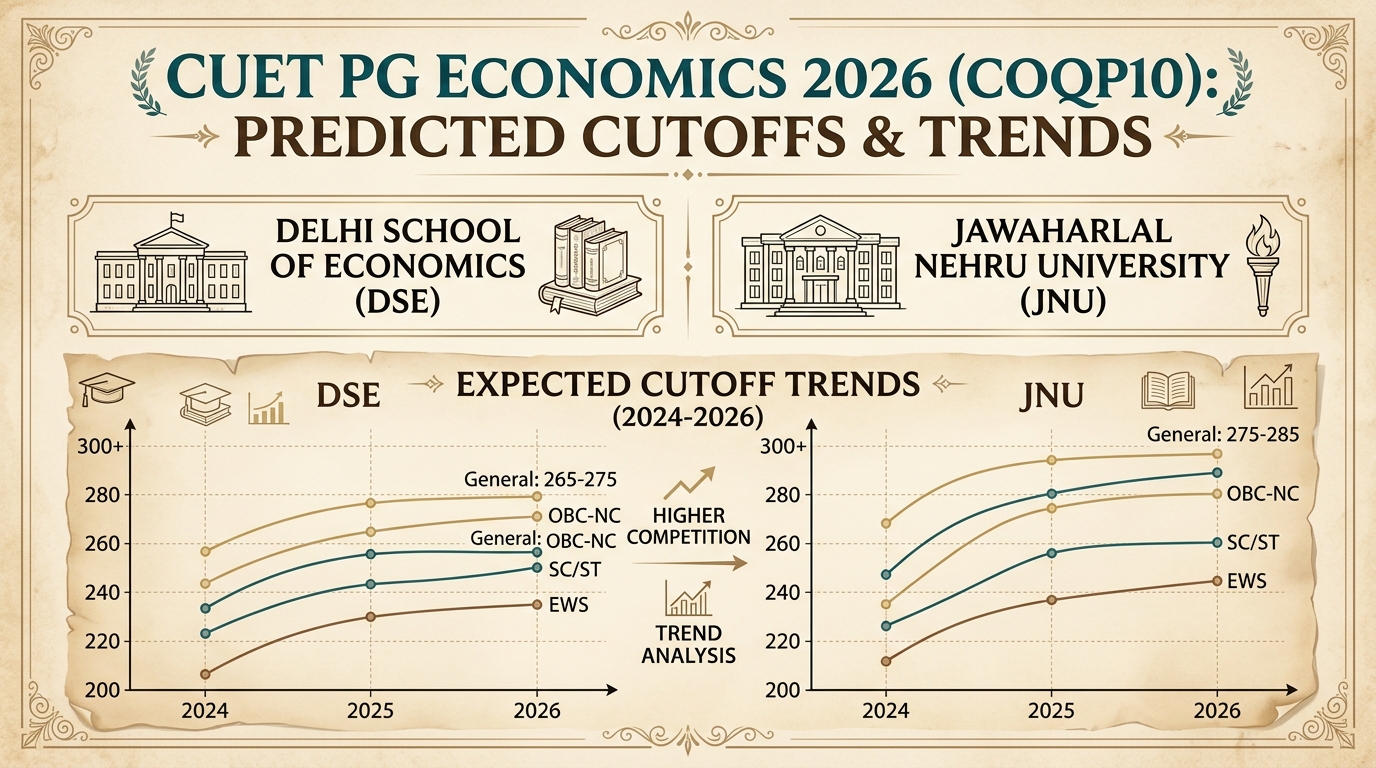
IGIDR Mumbai vs DSE: The Ultimate MA Economics 2026 Comparison Guide
Exhaustive deep-dive comparing IGIDR Mumbai and Delhi School of Economics (DSE) for MA Economics in 2026. Covers curriculum, placements, PhD prospects, campus life, and preparation strategies.