The First 5 Minutes of a DU Economics Exam: Tactical Hall Timetable & Selection Strategy
How to scan the paper, select optional questions, map time per mark, and execute a 180-minute exam hall strategy for 75-mark and 90-mark DU end-semester papers.

The first 5 minutes after receiving your end-semester question paper set by the DU Examination Branch dictate your performance over the next three hours. Entering an exam hall without a precise minute-by-minute timetable leads to rushed, incomplete final answers and lost distinction marks.

Minute-by-Minute Hall Timetable (180 Minutes Total)
| Time Window | Phase & Action | Tactical Objective |
|---|---|---|
| 0:00 – 0:05 (5 mins) | Scanning & Question Selection | Read all optional choices. Select 5 questions with highest quantitative certainty. Pencil-mark chosen questions. |
| 0:05 – 0:40 (35 mins) | Question 1 (Strongest Numerical) | Solve your most confident 15-mark numerical problem first to bank high marks early. |
| 0:40 – 1:15 (35 mins) | Question 2 (Second Numerical) | Execute second quantitative question. Check Bordered Hessian / FOC conditions before moving on. |
| 1:15 – 1:50 (35 mins) | Question 3 (Major Theory Model) | Write 5-page structured long answer (IS-LM or Solow Model) with full diagrams. |
| 1:50 – 2:25 (35 mins) | Question 4 (Second Major Theory) | Write 4-to-5 page theoretical answer with explicit assumptions and critical evaluation. |
| 2:25 – 2:55 (30 mins) | Question 5 (Short Notes / Final Q) | Complete short notes (7.5 marks x 2). Use crisp bullet points and focused diagrams. |
| 2:55 – 3:00 (5 mins) | Final Audit & Verification | Verify roll number, tie main sheet tags, check numerical units, and confirm question numbering. |
The Question Selection Decision Matrix
During the initial 5-minute scan, score each optional question out of 10 based on two criteria:
- Quantitative Certainty (Weight 60%): Does the question contain a numerical or mathematical proof where full marks can be guaranteed?
- Diagrammatic Mastery (Weight 40%): Do you remember the exact axis labels, curve shifts, and parameter assumptions for the accompanying economic diagram?
Related Tactical Guides
Learn how to structure your selected 15-mark responses by reading The DU Long-Answer Question Playbook and avoid calculation errors using Where DU Students Lose Marks in Numericals.
Frequently asked questions
Should I attempt questions in serial order?
No. Serial order is a habit, not a rule. Marks per minute is highest on questions you know cold, so those should be attempted first regardless of number.
How much time should I keep for review?
Roughly 15 minutes on a 180-minute paper. Use the review window to finish the questions you wrapped short, not just to check calculations.
What if I run out of time on the last question?
Write a short skeleton, introduction, key argument, conclusion, instead of leaving it blank. Examiners award marks for structure and direction even without full elaboration.
Dhairya sat the same DU papers he now writes about. Acadly is his attempt to say the useful things his own first-year self would have wanted to hear.
Keep reading
Last-Week Revision Strategy for Macroeconomics II: 7-Day High-Yield Roadmap
A day-by-day 7-day revision roadmap for DU Macroeconomics II. IS-LM, Mundell-Fleming, Phillips Curve, Solow Growth Model, and past 5-year paper solving.
Where DU Economics Students Lose Marks in Numericals: The 15-Point Accuracy Masterclass
Exhaustive analysis of the top 10 numerical blunders in DU MME, Micro, and Macro exams. Side-by-side Wrong Way vs Right Way solutions, Bordered Hessian checks, unit errors, sign conventions, and pre-submission scripts.
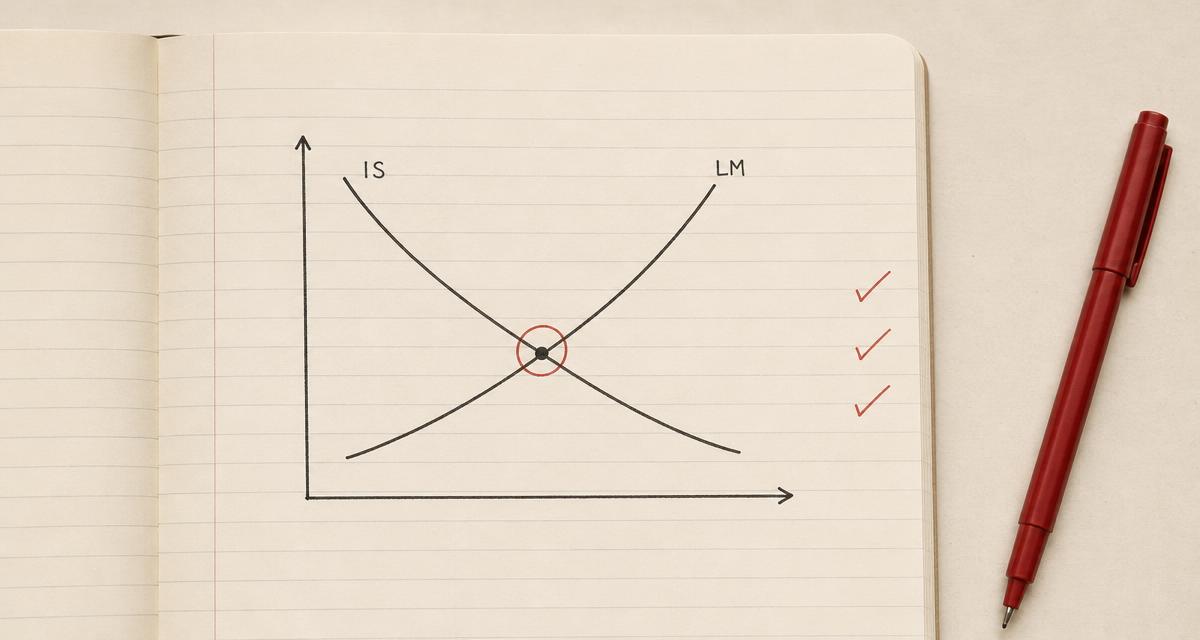
The DU Long-Answer Playbook: Structuring 15-Mark & 20-Mark Answers for Top Grades
How to structure 15-mark and 20-mark economics and social science answers for DU evaluators. Full word-for-word model answer scripts, diagrammatic blueprints, marking rubrics, and time-block strategies.